
- Home
- About Us
- Chillers
- Industrial RO System
- Projects
- Exhibition
- Certificates
- Infrastructure
- Contact Us
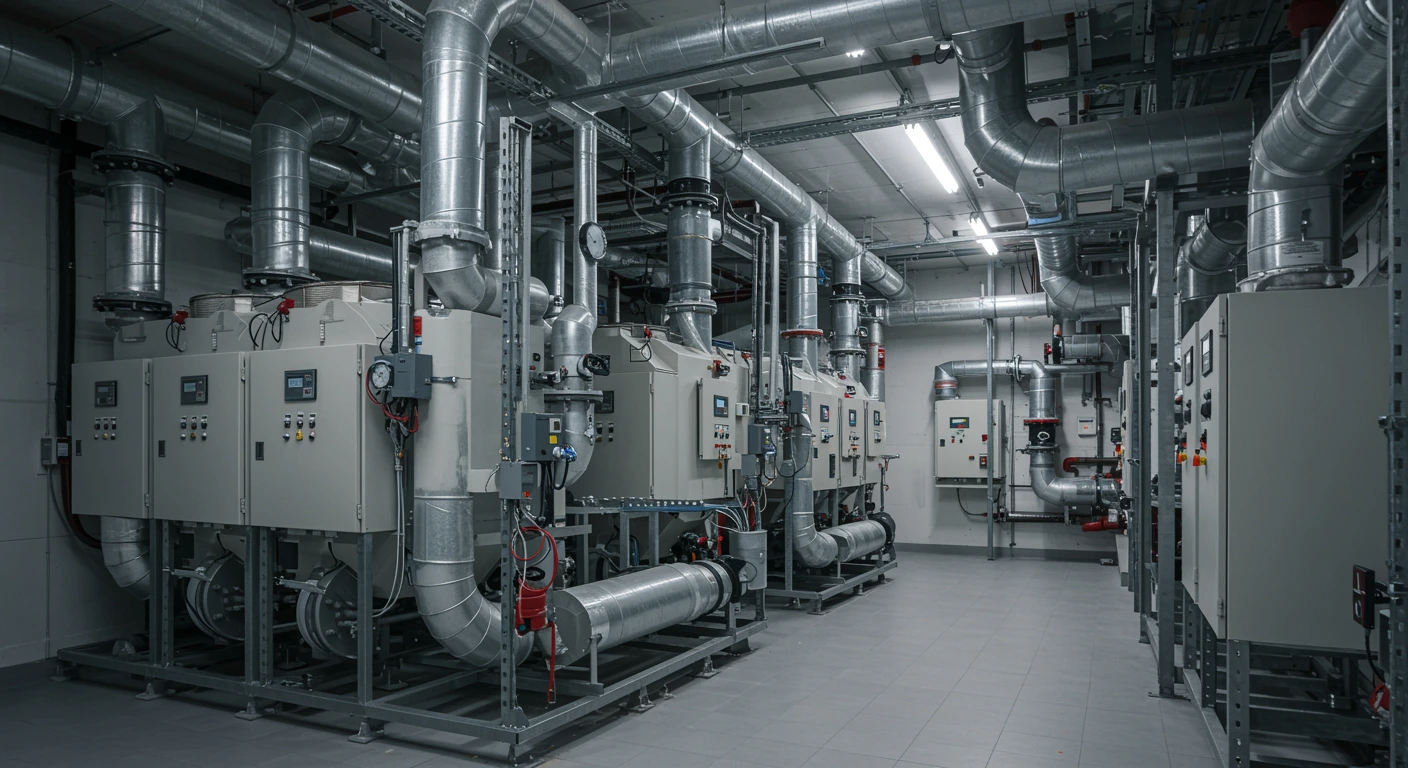
In 2026, the industrial cooling market is changing from having just a need for temperature control to needing thermal management driven by data. To the purchasing agent, cooling selection is no longer a checklist item on a facility checklist; it is a strategic decision that will impact operational uptime, energy costs, and sustainability initiatives. Manufacturing processes are becoming more accurate, and as a result, the need for reliable and effective cooling has reached its highest level thus far.
Selecting a system requires an understanding of the specific thermal loads for your facility. Whether operating a plastic injection moulding facility or a state-of-the-art pharmaceutical lab, the cooling unit is the heart of the production line. Making an informed decision will allow for your machinery to operate within optimal specifications and provide a longer useful life for expensive equipment and reduce costly unscheduled maintenance.
By 2026, energy efficiency will be the leading factor for procurement purposes. Most of today’s modern Industrial Process Chiller units are now equipped with Variable Frequency Drives (VFD), enabling the compressor to change its speed based on the actual demand for cooling, rather than operating at a constant full capacity. When assessing a chiller, do not focus on the unit's nominal COP (Coefficient of Performance); rather, you should focus on the unit's IPLV (Integrated Part Load Value). The IPLV gives a better representation of how a machine performs over the course of the season and at different production shift levels.
Each industry has a huge variety of thermal environments. Where the temperature of a comfortable cooling (HVAC) system would be considered 'satisfactory' for most industries, this is generally far from adequate for an industrial application. An example of an industry requiring much more precision than HVAC would be one that processes volatile chemicals or uses specialised cold chain storage. If your plant handles either of these processes, you need to have a low-temperature chiller capable of keeping fluids well under the freezing point of water. To check the operation of the chiller unit, maintaining a satisfaction level of efficiency while using glycol-based refrigerants or low-pressure R134a refrigerants will be extremely important in maintaining the integrity of your manufacturing process and the quality of your finished product.
The design of the unit will determine how long it can last under extreme conditions found across various industries in India. For this reason, procurement officers should look for units that use corrosion-resistant heat exchangers and superior-quality stainless steel tanks. Having local technical support as a backup for equipment repair is essential. Several top-quality Industrial Water Chiller Manufacturers In India now offer remote monitoring to enable facility managers to resolve any issues before the unit fails. They also provide predictive maintenance alerts that inform facility directors of any problems before they cause an incident.
Connectivity will define the industrial environment in 2026. Today's chillers are expected to not function as isolated pieces of equipment but instead connect with Building Management Systems (BMS) through protocols such as Modbus or BACnet. With these connections, you can be provided with both real-time data logging capabilities and information about power consumption, all of which are accessible remotely so that operational adjustments can be performed quickly and efficiently. When choosing an advanced industrial water chiller system, you will enable your engineering staff to use the data provided by these systems to enhance your entire facility's thermal footprint and reduce carbon emissions.
In today’s manufacturing environments where space is at a premium, building and procurement officers need to factor in the physical footprint and noise levels of the cooling unit. The use of customization options like built-in pumping stations, integrated buffer tanks, or split system designs can lead to savings in installation time and cost. Partnering with established Industrial Chiller Manufacturers gives you the option to customize the unit size and ports so that it fits comfortably into your existing floor space, eliminating the need for any structural changes.
| Factor | Critical Consideration | 2026 Industry Benchmark |
|---|---|---|
| Cooling Medium | Compatibility with process fluids | Hybrid Air/Water Cooled systems |
| Control Systems | Interface and Connectivity | IoT-enabled with Mobile App access |
| Refrigerant Type | Environmental Compliance | Low GWP (Global Warming Potential) gases |
| Maintenance | Ease of access to components | Tool-less panel removal & Modular design |
| Scalability | Future expansion capacity | Modular "Click-and-Connect" capability |
The following technical advantages should be considered when acquiring new units. they will assist and maintain an effective financial investment over an extended period of time:
Before any other steps can be taken, the procurement process begins with a complete audit of your present and anticipated cooling requirements. It is common for companies to specify too large a chiller for their cooling load and then experience short cycles, which can lead to significant wear due to the frequent starting and stopping of the chiller. Conversely, if you achieve less than the required BTU output, you may continuously run the chiller at 100% capacity and subsequently incur enormous increases in your electric bill.
It is important that you work with an established industrial chiller manufacturer early in the design process, as they can provide the necessary engineering assistance needed to accurately determine the total BTU heat rejected by your equipment and develop a layout that optimally utilizes the required space on your facility's floor.
Additionally, when selecting a refrigerator manufacturer in the Indian market, finding a manufacturer who is familiar with the local climate challenges (high ambient temperature & humidity) is important to ensure that your chiller will not fail you at peak times during summer months.
Here is another blog you might be interested in.
An Overview of Industrial Chillers
Aquatech is the best industrial water treatment provider. Also, we are the most trusted and reliable partner for many businesses. Since 2014 we have been providing solutions to many industries under the direction of Mr. Husain Shersiya. Our expertise is to provide the companies with high performance and customized solutions. We also offer RO plants and water softeners and many water purification technologies that are used in modern industries. Aqua Tech Plus focuses on customer satisfaction with providing services, including consultation, installation, and maintenance. We provide sustainable solutions that meet the modern industrial demands. If you are ready to source a high-quality industrial water treatment system, then you are at the right place. We also serve cooling and heating solutions, commercial chillers, HVAC systems, and many other related products.
The complexities surrounding industrial cooling in 2026 require capital investments and efficient operations to be blended together to ensure that there is a balance between the two types of expenditures. Procurement professionals will be able to acquire chillers that provide a robust foundation for the company's manufacturing quality by focusing on smart integration, energy-efficient technologies, and local service support. The right chiller is not simply an acquisition; it is an investment in the overall quality and reliability of your entire manufacturing environment.
If you're looking for industrial water chillers, RO systems, water treatment equipment, softeners, DM plants, or other similar equipment, we will be the best fit for your needs. Call Us Today.
Ans: While COP (Coefficient of Performance) measures efficiency at a single, full-load point, IPLV (Integrated Part Load Value) is the 2026 industry benchmark. It reflects how the chiller performs under varying loads and seasonal temperatures. For procurement officers, focusing on IPLV ensures lower year-round energy costs, as most industrial processes rarely require 100% cooling capacity at all times.
Ans: Modern chillers utilize protocols like Modbus or BACnet to integrate with Building Management Systems (BMS). This allows for real-time data logging and remote monitoring. The primary ROI comes from predictive maintenance: sensors identify vibration or pressure anomalies early, allowing you to fix small issues before they turn into expensive, unscheduled production shutdowns.
Ans: Environmental compliance is a major factor in 2026. Choosing chillers that use Low GWP (Global Warming Potential) gases or refrigerants like R134a ensures your facility remains compliant with evolving green energy mandates. This future-proofs your investment against potential regulatory fines or the need for early equipment replacement.
Ans: Yes. High-quality manufacturers now offer footprint optimization through modular "click-and-connect" designs, built-in pumping stations, and integrated buffer tanks. These features eliminate the need for external components, saving valuable square footage and reducing the complexity of the installation.
Ans: Microchannel heat exchangers provide superior heat transfer efficiency while requiring a significantly lower refrigerant charge. Their compact design allows the chiller to be smaller and lighter, which is ideal for rooftop installations or crowded factory floors, all while reducing the unit's overall environmental impact.
Ans: Sourcing from regional manufacturers—particularly those familiar with the high ambient temperatures and humidity of the Indian climate—is highly recommended. Local sourcing ensures faster access to spare parts, quicker on-site engineering support, and equipment that is specifically engineered to handle local environmental stresses.
Ans: Short-cycling occurs when a chiller is oversized for its actual cooling load, leading to frequent starting and stopping that wears out the compressor. To avoid this, it is essential to conduct a thermal load audit before purchase. Working with an engineering partner helps accurately calculate the total BTU heat rejection required for your specific machinery.