
- Home
- About Us
- Chillers
- Industrial RO System
- Projects
- Exhibition
- Certificates
- Infrastructure
- Contact Us
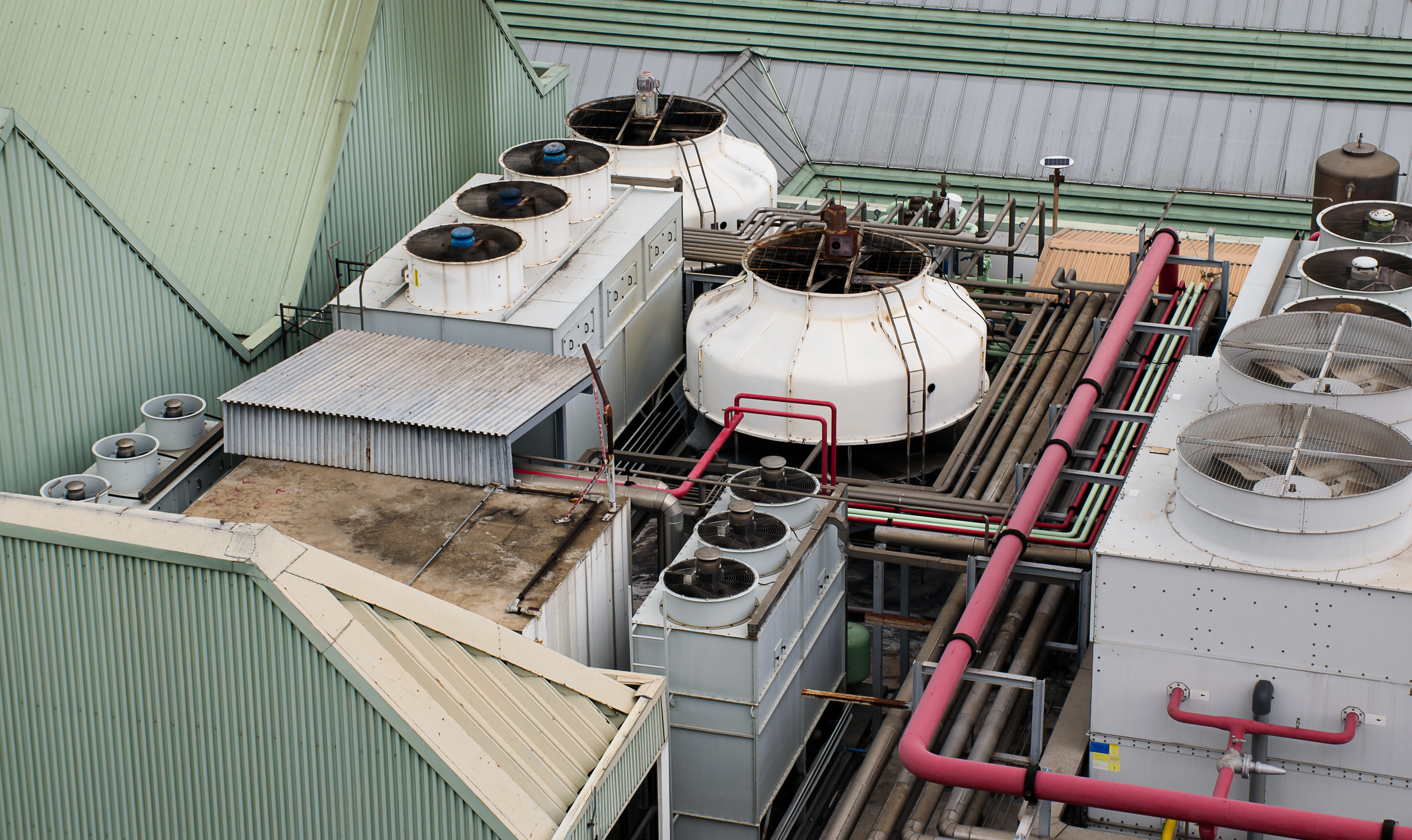
Water chiller systems play a major role to support everyday activities and heavy industrial work. They are used in manufacturing plants, hospitals, plastic processing units, and even small setups such as aquariums. Whenever machines operate for longer hours than heat keeps increasing. This is not good sign because if heat is ignored, machines start losing efficiency, parts can get damaged, and safety risks also can rise. A water chiller controls this situation by taking away excess heat and maintaining a stable operating temperature.
A chilled water system also called a water chiller that is a cooling system that cools down water by refrigeration for removing heat. The cooled water is circulated in pipes to remove the heat generated in machines or in rooms and it is pumped back in the chiller to be cooled once more.
Water chillers serve a significant number of industries and general applications as temperature regulation is important in every place.
Large water cooled chiller systems are used in district cooling systems to provide chilled water to several buildings. Air conditioning in malls, airports and hospitals has been centralized with the use of water chillers to provide uniform comfort.
Temperature control in food/beverage processing produces quality and safety. Industrial water chillers are applied in pharmaceutical and medical industries to keep sensitive materials and equipment secure. Systems of cold storage and thermal energy storage depend on the use of chillers to store low temperatures over a long duration.
Intense heat is produced in industrial machining, plastic processing, welding, laser cutting and waterjet cutting. In this case, water chillers are used in industries to safeguard machines and enhance quality output. Smaller systems such as a home water chiller, drinking water chiller, aquarium water chiller or fish tank water chiller adopt the same principle of cooling in a smaller scale.
All water cooled chiller systems operate using two loops. One loop is responsible for the creation of cooling, while the other loop is responsible for the distribution of cooling.
The refrigeration loop is the one that creates the cooling effect, using a combination of refrigerants and mechanical parts. The loop chilled water carries the water that has been cooled to the location where cooling is required for consistent performance, both loops must function.
Refrigeration loop regulates the heat flow by use of the chiller. This is comprised of compressor, evaporator, expansion valve and condenser.
Water is passed through the chilled water loop to machines or air handling units. The water goes back to evaporator where it absorbs heat hence cooling itself once again. This loop system allows one water chiller plant to serve more than one cooling point.
Hot always gives off the heat to cold. This is an example of a principle of water cooled chiller. Proper heat transfer helps in cooling and preventing over heating of equipment.
The chillers are beneficial sources of energy through cooling. It is quantified through such parameters of energy efficiency as COP and EER.
Chillers mostly operate with the vapor compression cycle which moves heat with a refrigerant, changing it from liquid to gas and then back again.
This method is applicable in air-cooled chillers, water-cooled chillers, industrial water chillers, including small and mini water chiller.
The refrigerant takes away the heat in the evaporator of the water. The refrigerant is at this point present in the low pressure liquid form. As it takes in heat it is transformed to a gas. Due to this heat transfer the water is cooled down and directed to the necessary usage either as an industrial water chiller, water chiller plant, or water chiller AC units.
The refrigerant absorbs heat and then passes to the compressor where it gains pressure and temperature. The hot gas refrigerant is then pumped into the condenser. Through a water cooled chiller system, the condenser eliminates the heat by passing it through the cooling water. When the refrigerant loses its heat, it will transform back to a liquid state.
The vapor compression cycle is basic working cycle of water chiller system. This cycle allows the water chiller machine to absorb heat from water and release it outside. The cycle works in four main stages, and each stage has a specific role in cooling.
Compression process begins as the refrigerant gets into the compressor in the form of a low-pressure gas. The refrigerant is then compressed by the compressor and its pressure and temperature rise. Once compressed the refrigerant is a high pressure high temperature gas. The reason behind this step is to ensure that the refrigerant is ready to give out heat in the following step. Within a water cooled chiller system, the compressor would maintain constant and uninterrupted flow of the refrigerant.
The hot refrigerant gas passes through the compressor into the condenser. During this phase, the refrigerant emits the heat that was previously accumulated. The heat is passed onto cooling water in a water cooled chiller using the condenser tubes. The refrigerant is converted into high-pressure liquid as it cools down to a gas. This will aid in eliminating undesired heat of water chiller system.
After the refrigerant turns into a liquid, it flows on the expansion valve. The pressure is suddenly dropped by the expansion process of the refrigerant. Due to this pressure drop, the refrigerant temperature also drops. Low-pressure low temperature liquid are some of the properties that the refrigerant is in when it leaves the expansion valve. This move equips the refrigerant to take in heat once more in the evaporator.
During the evaporation process cold refrigerant passes through the evaporator. In this case, it takes in heat of the water passing through the evaporator. When the refrigerant absorbs heat, it becomes low pressure gas instead of a liquid. Such heat transfer cools water and it is utilized in the water chiller plant, industrial water chiller systems or other cooling systems. Once this is done, the refrigerant is pumped into the compressor and the process is repeated.
A water chiller system has the chilled water loop as a significant component. It is the route whereby the chilled water passes through the water chiller machine to the equipment or place requiring cooling before being passed back to the chiller. This loop assists in a constant temperature and in easy extraction of heat out of the system.
The key objective of the chilled water circuit is the transportation of cooling of the water chiller to various applications. When the water is cooled in the evaporator, it is passed through pipes to the machines, air handling units or process equipment. When the water absorbs the heat, it goes back to the chiller where it is cooled back again. This constant flow maintains the industrial water chiller systems and water chiller plants in constant operation.
Plain water is a medium of cooling in many water chiller systems. Nevertheless, where temperatures may become very low, water is combined with the antifreeze. This combination avoids freezing in the pipes and heat exchangers. Antifereeze helps prevent the breakdown of the system as well as to make the water chiller safe under various weather conditions.
Pumps have an important role in the chilled water loop to circulate water within the system with a specific speed. Air handling units have coils, which are usually used to absorb the heat in the air or equipment with the help of chilled water. Heat exchangers are used to move heat in-between water and refrigerant, and they do not mix. The combination of these elements assists the water chiller system to provide quality and consistent cooling.
The difference between the coldness of the supply water and the coldness of the return water indicates the amount of heat that has been taken away. The difference is referred to as the cooling range. Correct temperature level makes the water chiller machine effective. When there is a small or a large difference in the temperature, it may influence the operation of the system and the energy consumption.
Even cooling requires the proper flow of fluids throughout the system. In case of too low or uneven flow of water, they might not cool in some areas. System balancing will make sure that the appropriate quantity of chilled water gets to all the parts of the system. Balancing enhances performance, equipment protection, and water chiller system longevity.
When you purchase a water chiller then you need to check the tonne capacity for your requirement.
In a water cooled chiller system, the main components include:
The modern cooling systems are based on water chillers. It can be an industrial water chiller, a commercial aquarium water chiller system or a small aquarium water chiller, but the principle of its work is the same. Knowledge of the working principle of a water cooled chiller system would assist the students and professionals in making an informed decision.
A right water chiller machine supports stable operation and make sure to long term reliability. The impact of cooling stays visible in performance, safety, and efficiency every day.
A water chiller is a cooling technology that takes out all the unnecessary heat in water and keeps it at a constant temperature. Its applications are to secure machine, enhance efficiency and safe operation in manufacturing, hospital, food and HVAC industries. Water chillers also ensure that equipment is not damaged or its performance is lost due to heat.
A water-cooled chiller operates based on two primary loops; refrigeration loop and the chilled water loop. The refrigerant within the refrigeration loop takes up the heat of water and the chilled water loop within the refrigerant circulates the cold water to machines or air handling units. The heat absorbed is then removed using the condenser and cooling tower and the process is repeated again and again.
Applications of water chillers in industries have been very common in machining processes, plastic, laser cutting, pharmaceuticals, food and beverage processing, hospitals, malls, airports and in district cooling systems. Smaller water chillers are also applicable in home, aquarium, drinking water system as well as laboratories where strict temperature control must be met.
The right water chiller is based on the load of heat and the way it will be used. Small chillers (such as a lab or an aquarium) might only require 1-2 ton chillers, medium sized chillers (offices or minimal factories) might require 5 ton chillers, and big factory plants or in commercial facilities may require 15 ton or more capacity chillers. Correct capacity selection provides the efficiency of energy and long life of equipment.