
- Home
- About Us
- Chillers
- Industrial RO System
- Projects
- Exhibition
- Certificates
- Infrastructure
- Contact Us
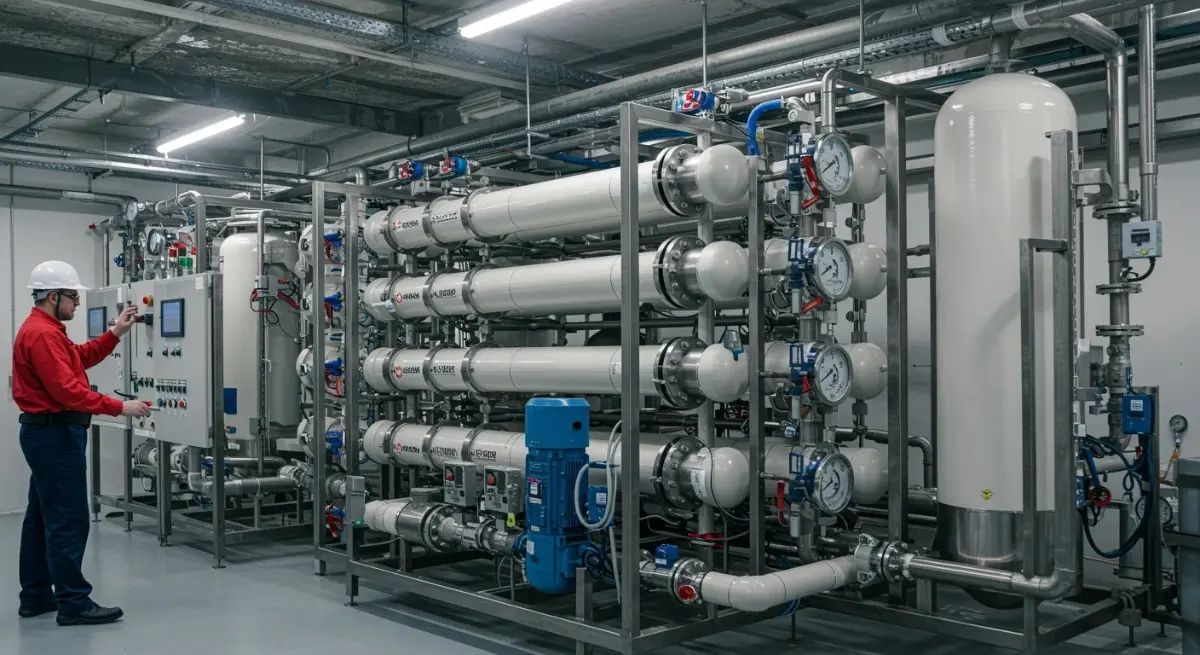
In water treatment, one of the biggest operational costs is energy consumption. That's why many industries trust most in reverse osmosis technology for water purification, but ineffective operation can lead to unnecessarily high electricity bills. Industrial reverse osmosis systems are the best option to reduce the power consumption with better performance and without compromising performance.
First of all, we need to understand how an Industrial RO Water System uses energy. It helps to reduce the power consumption. High-pressure pumps that force water through selective barrier membranes during the filtration cycle consume most of the energy.
The system works hard and increases the energy consumption with high cost if these factors are not optimized.
The Reverse Osmosis Process plays an important role in reducing the energy consumption. To get good filtration output, the system requires all parameters to be balanced correctly.
Here are a few ways to optimize the process:
The reverse osmosis process not only reduces the energy consumption but also increases the membrane lifespan and plant efficiency.
Trivia
The largest industrial RO plants in the world are used in desalination facilities to provide drinking water for entire cities.
The outdated water treatment solution causes the high power consumption, and the modern alternatives are better for industries. One of the most preferred pieces of equipment, industrial reverse osmosis, can easily save power and be cost-effective for these industries. Upgrading components is very important.
Modern industrial reverse osmosis systems are designed with energy optimisation in mind, making them far more efficient than older installations.
For any industrial RO plant, proper maintenance is very important, and also the system needs balanced pressure for better performance and the same output.
To produce the same amount of purified water requires a well-maintained Industrial RO Plant that works smoothly.
Choosing the experienced Industrial RO System manufacturer in India can be a great decision for industrial plants for long-term energy performance. Good and reliable manufacturers design systems that match your specific water quality and production requirements.
Also, RO plant manufacturers in India provide technical support and performance monitoring by checking that your system continues to operate at peak efficiency.
Trivia
An efficient industrial RO water system can recycle a significant portion of wastewater back into usable process water.
When industry is ready to procure, evaluating the industrial RO system price is very important for better performance, and also they check if the energy consumption is efficient or not; it's also equally important for industries.
A lower upfront industrial RO system price might seem attractive, but ineffective equipment can cause higher electricity bills over time. That's why it's important for industries to go with good machines or equipment.
Operational optimization can greatly improve the efficiency of your industrial reverse osmosis system. Also, small adjustments in system parameters can reduce electricity consumption without better water output.
With the help of these, industry can improve the industrial osmosis system with better performance and reduce the energy wastage.
In modern industry digital monitoring tools and smart sensors are becoming common for water treatment facilities. With these technologies, operators are allowed to monitor the performance of an industrial RO water system in real time.
Trivia
Many industrial reverse osmosis systems run 24/7 in factories. While workers go home, the system keeps quietly purifying water all night long.
Here are some tips mentioned below for saving energy consumption.
You might also be interested in this blog:
Complete Guide to Water Chillers: Types, Capacity, Working & Selection
Here is the table with the key highlights of key optimisation that helps to reduce the power consumption in the RO system.
| Optimization Method | Potential Energy Saving | Description |
|---|---|---|
| High-Efficiency Pumps | 10–20% | Reduce electricity required for pressure generation |
| Variable Frequency Drives | 15–30% | Adjust pump speed based on demand |
| Membrane Maintenance | 5–15% | Prevents pressure increase due to fouling |
| Energy Recovery Devices | 20–40% | Reuses pressure energy in large RO plants |
| Smart Monitoring Systems | 10–15% | Detects inefficiencies early |
Aquatech Plus Pvt. Ltd. is a leading industrial RO system supplier in India. We are focused on designing and producing high-performance industrial chillers, chiller plants, and industrial water treatment systems tailored to various industrial needs. If you are also thinking for installing the new system or upgrading with the performance and less power consumption Aquatechplus is the solution to these problems easily because it has good experience in this field, and also they have worked with many industries for 12+ years. They provide various industrial water solutions, like industrial RO systems, water treatment systems, and more related solutions.
Systems require a combination of great machines and regular maintenance to reduce the power consumption of industrial water treatment. Also, industry can reduce operational costs while maintaining reliable water performance by focusing on pump efficiency, membrane health, and real-time monitoring.
Reducing energy usage in an industrial reverse osmosis system mainly involves optimizing operating pressure, maintaining clean membranes, and using energy-efficient pumps. Installing variable frequency drives (VFDs) can also help regulate pump speed based on demand. Regular monitoring ensures the system runs efficiently without wasting power, which ultimately lowers operational costs
Several factors influence the efficiency of an industrial ro plant, including feed water quality, membrane condition, pump efficiency, and system pressure. Poor pretreatment or fouled membranes force the system to operate at higher pressure levels, increasing electricity consumption. Proper system design and routine maintenance are essential for maintaining optimal efficiency.
Yes, the industrial RO system price can sometimes reflect the quality and efficiency of the equipment. Lower-priced systems may use less efficient pumps or outdated technology, which increases long-term electricity consumption. Investing in a slightly higher-quality system often results in lower operating costs and better performance over time.
An industrial reverse osmosis setup should be inspected regularly to maintain efficiency. Membrane cleaning schedules depend on feed water quality, but many facilities perform preventive maintenance every few months. Regular monitoring of pressure levels, flow rates, and filter conditions helps prevent energy loss and ensures consistent system performance.
Experienced RO plant manufacturers in India design systems that match the specific needs of industrial applications. Proper system design ensures optimal pump sizing, membrane selection, and energy recovery integration. Working with reputable manufacturers can significantly improve efficiency and reduce long-term electricity consumption.
The reverse osmosis process is widely used in industries because it effectively removes dissolved salts, impurities, and contaminants from water. This ensures high-quality water for manufacturing, pharmaceuticals, food processing, and other applications. When optimized properly, the process can deliver excellent purification results while maintaining controlled energy consumption.