
- Home
- About Us
- Chillers
- Industrial RO System
- Projects
- Exhibition
- Certificates
- Infrastructure
- Contact Us
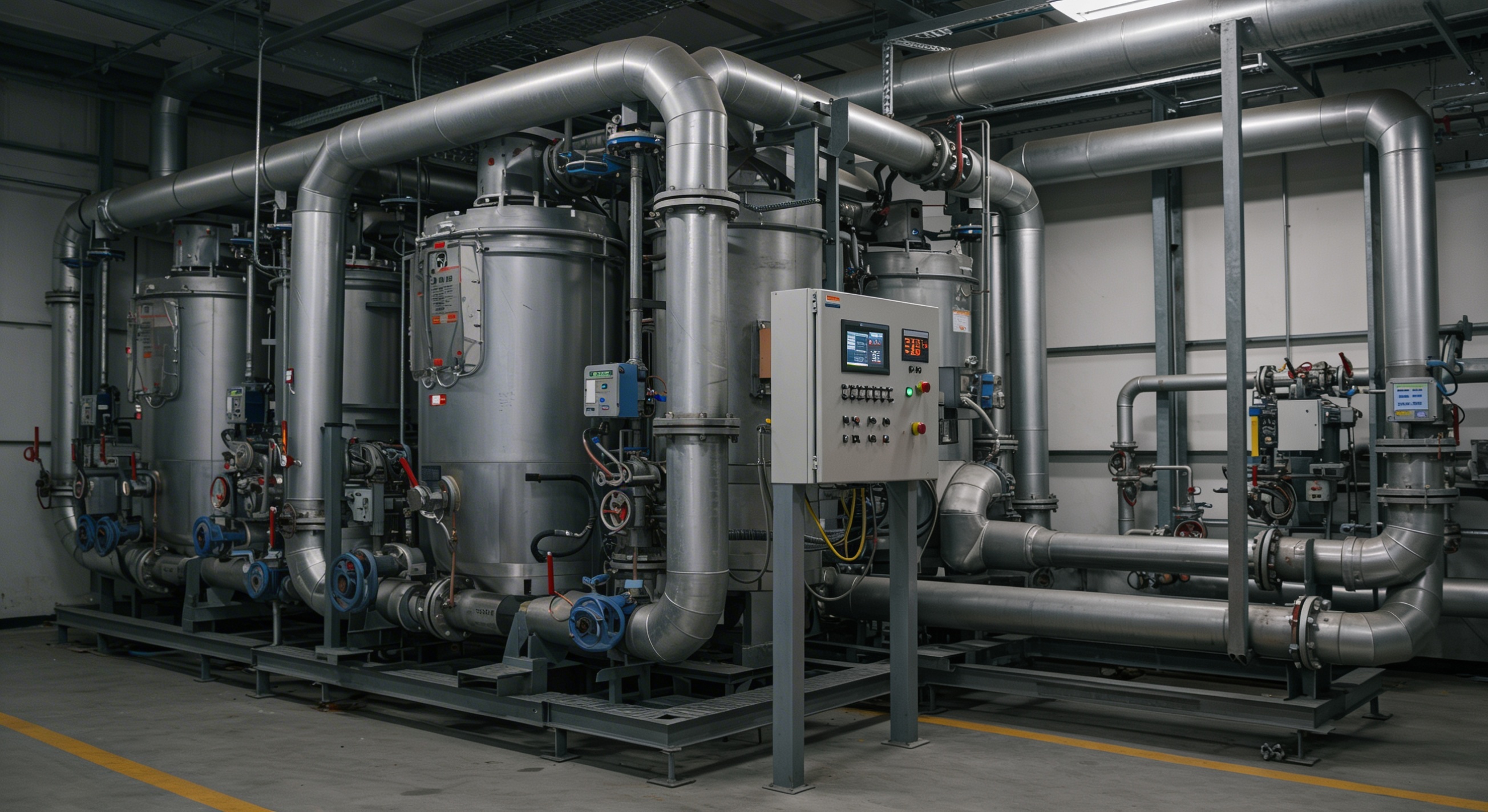
Note: A tipping point is a point where small issues become intense enough to result in vital changes.
Temperature control forms the basis of many industrial settings. Temperature control in such settings is not just a utility but forms the basis of production in industries like pharmaceutical industries, plastic injection molding units, and so on. It does not matter what you are associated with; the chiller might be the most important part of any industrial background.
With every passing year, the plant managers often face the same confusion—whether to repair the old chiller or to invest in a new one. When to switch from an old chiller to a modern system from leading Water Chiller Manufacturers is a financial and operational decision. This blog will explore the hidden cost and technical factors that indicate the signal that it is time for a replacement.
Here a the factors. Let us look at them one by one.
The primary way to know the tipping point is the "50% Rule." If you find out that the cost of a single repair is more than 50% of the price of the new Industrial Water Chiller, replacement is always the better option. You should also consider the overall life cycle cost. A chiller that is more than 10 years old will have an efficiency much less than a new machine, and the cost of ownership of such machines will be much higher. In such cases, it is always better to replace the machine.
With the latest advancement in technology, chiller systems that are developed today are much more modern with new features. When compared to old systems, they are more efficient. Older Chiller HVAC Systems generally have fixed-speed compressors that operate at full capacity even in situations when the cooling load is not much higher.
When calculating your tipping point, glance at your bills. If your bills have risen even after a fixed production load, your old chiller is worn out, and you need a replacement.
Many times, the tipping point is calculated by changed regulations. For instance, many old industrial chillers still operate with R-22 (Freon). This refrigerant has become obsolete and is no longer used in industrial chillers. You wouldn't want to use something that has become obsolete.
You must already know one important fact. In the industrial processes, the temperature for chiller output must remain fixed. A change of even 2.5°C can negatively affect the chemicals. With a process chiller getting old, its capacity to maintain an exact setpoint gets lowered. This is due to the following factors:
If you detect “wrong readings” more than once or twice, it is time to replace your chiller.
For specific applications such as that of low-temperature chillers, there is no scope for errors. These systems operate under extreme pressure. With time, these units become old. They cease to operate as effectively as they used to, say, 10 years before. If your chiller compressor is running all the time to maintain the required temperature it used to achieve in 30 minutes previously, it is a sign that the mechanical parts have worn out and it is time for the switch.
Many buyers fail to understand the optimum parameters required in an industrial chiller. Let us have a view.
| Specification Category | Common Industry Standard Details |
|---|---|
| Chiller Type | Air-Cooled / Water-Cooled / Glycol / Process Chiller (varies by model) |
| Refrigerant | R407C, R134a, R404A, R410A (depending on model & cooling capacity) |
| Compressor Type | Hermetic Scroll, Semi-Hermetic Screw, Hermetic Rotary, Piston/Scroll combinations |
| Condenser Type | Air-Cooled Finned Coil / Shell & Tube / Tube-in-Shell / Water-Cooled Condenser |
| Evaporator Type | SS Tank with Coil / Shell & Tube / Brazed Plate / Spiral / Straight Tube Array |
| Cooling Capacity Range | ~8 kW to 430 kW+ depending on model size & application |
| Input Power Requirements | Typically 0.5 kW up to 250 kW+ (3-phase, 380–480 V, 50/60 Hz) |
| Control System | Thermostatic expansion valve / Capillary tube / External balance TXV |
| Water Flow & Pump | Centrifugal pumps with power ratings 0.75 kW to 5.5 kW+ (varies) |
| Pipe Sizes | DN32 to DN80+ depending on capacity & cooling circuit |
| Typical Operating Temperature Range | Chilled water output typically ~3–35 °C (customizable) |
| Safety & Protection | High/Low Pressure Switch, Overload, Phase Failure, Flow Protection (varies by OEM) |
Any parameter, apart from the ones given in the table, should instantly be taken into consideration, and you should decide if you need to repair or replace your chiller.
If you can tick more than three boxes below, it is time to connect with leading suppliers like Aquatech Plus to order a new chiller.
Newer chiller models come with advanced features. Getting a new one for your business will make your unit future-ready. This is what they offer:
This blog may seem biased, but it is definitely NOT. You do not want to wait for the “right time” to invest in chillers. It would be a bad decision to get a new one when your current machine has exploded. in the middle of an intense production. That will not be a smart business decision but a desperate one.
At Aquatech, we provide you high-quality industrial chillers at competitive prices. If you are ready to replace your old machinery or need advice, we are here. Connect with us today. Our team is there to assist you and solve all your queries. We offer top-notch products, including industrial chillers, screw chillers, water chillers, HVAC systems, bulk milk chillers, and so on. Ensure an excellent ROI today. Call Us Now.
Which gas is used for cooling in chillers?
Complete Guide to Water Chillers: Types, Capacity, Working & Selection
Common Early Signs of Water Cooler Cooling Problems You Should Never Ignore
While possible, it is often a "Conversion Trap." Modern refrigerants operate at different pressures than R-22. Retrofitting an old process chiller often requires changing the expansion valve, seals, and oil. Even then, you may see a 10–15% drop in cooling capacity and an increased risk of leaks. A purpose-built unit from reputed water chiller manufacturers is always the more reliable long-term path.
Beyond the purchase price, you must calculate the Total Cost of Ownership (TCO). In India, with high industrial electricity tariffs, a modern industrial water chiller with a Variable Frequency Drive (VFD) can reduce energy bills by 20–30%. If your energy savings over three years equal or exceed the cost of the new machine, the replacement pays for itself.
It is not illegal to operate an existing R-22 system, but it is becoming increasingly difficult and expensive to maintain. As per India's phase-out schedule under the Montreal Protocol, the production of R-22 for service is being heavily restricted. If your chillers HVAC system leaks, finding virgin R-22 gas will be costly, and recycled gas often contains impurities that can damage your compressor.
Watch your "Pull-Down Time." If your low-temperature chiller used to reach its setpoint (e.g., -5°C) in 20 minutes but now takes 45 minutes with the same load, your system is struggling. This is usually due to scale buildup in the heat exchanger or a dying compressor—both of which signal that you are hitting the "Tipping Point."
A strategic replacement is much faster than an emergency repair. While a major compressor repair on an old unit can take 4–7 days (waiting for parts and gas), a new unit installation is usually a "plug and play" process that can be completed in less than 24 hours (ideally on a weekend) to ensure zero impact on your production cycle.
Aging sensors and clogged condenser coils are the main culprits. If your temperature for chiller output varies by more than 2°C, it can lead to rejected batches in pharmaceutical or plastic industries. Modern chillers use digital microprocessors that maintain precision within ±0.5°C, ensuring your product quality remains consistent.